APEC Explores Shenzhen’s Transformation Into a Global Innovation Hub
Just another WordPress site
Press Release Disclaimer: This is a press release distributed through the XPR Media network. It has not been independently verified by our newsroom.
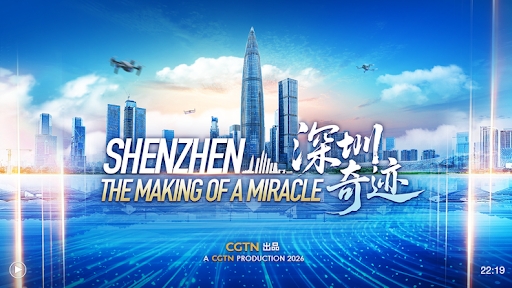

18 Nov., 2026 – SHENZHEN, China – Shenzhen’s transformation from a small fishing settlement into a major center for technology, manufacturing and research and development represents a significant change. In little more than four decades, the coastal city has developed into an international center for advanced industries, digital technology and scientific research.
The transformation accelerated with the establishment of the Shenzhen Special Economic Zone in 1980. The designation introduced market-oriented reforms, foreign investment and industrial experimentation. Shenzhen’s location beside Hong Kong, access to international trade networks and policy support attracted manufacturers, entrepreneurs and workers.
Manufacturing defined the early stage of development. Factories, export businesses and supply-chain operations expanded, establishing Shenzhen as an important production center. Electronics assembly and component manufacturing became central industries, while infrastructure supported growing trade and population levels.
The description “world’s factory” became closely associated with Shenzhen during the manufacturing boom. The label reflected the scale of production and the city’s role in global supply chains. Industrial growth also created conditions for economic diversification. Manufacturing experience, supplier networks, engineering capabilities and access to capital provided a foundation for product development and technological research.
A stronger focus on innovation marked the next stage. Shenzhen moved beyond large-scale assembly toward design, advanced manufacturing, software, communications equipment and research-intensive industries. Investment in education, infrastructure, technology facilities and business development helped create a diverse technology ecosystem.
The phrase “Silicon Valley of hardware” describes Shenzhen’s connection between product design, engineering and manufacturing. Dense supplier networks allow prototypes and components to move quickly through development and production. Technical talent, manufacturing capacity and entrepreneurship have supported businesses in consumer electronics, robotics and telecommunications.
Bert Hofman, former World Bank country director for China, Mongolia and Korea, examines Shenzhen through the city’s history, industrial evolution and policy decisions. The analysis considers economic conditions and institutional choices behind the city’s rise, alongside contributions from business leaders, workers, researchers and public officials. Such perspectives place Shenzhen’s experience within China’s wider economic transformation.
Author Zak Dychtwald, known for the book Young China, offers another perspective on Shenzhen’s changing identity. The futuristic urban environment and expanding technology sector show emerging technologies moving from experimental concepts into practical applications. Robotics, artificial intelligence and connected devices increasingly feature in research programs, commercial ventures and public demonstrations.
Major technology companies including DJI, Huawei and Tencent have contributed to Shenzhen’s international profile. The companies represent areas including drone systems, telecommunications, consumer devices, software and digital services. Startups and research teams also explore applications in automation, artificial intelligence, robotics and other fields.
Universities, laboratories, incubators and innovation centers support the wider ecosystem. Robotics competitions and university research programs create opportunities for technical development and collaboration. Startup communities connect entrepreneurs with engineers, investors and industry specialists, while research facilities support emerging technologies. Links between academic research and commercial manufacturing remain a notable feature of Shenzhen’s development model.
Shenzhen’s evolution also brings challenges. Population growth increases demands on housing, transport, public services and urban planning. Industrial upgrading requires investment in skills, research and environmental performance. Global competition, changing supply chains and technology regulation also influence business conditions. Continued progress depends on balancing economic growth with sustainable infrastructure and long-term research capacity.
The city’s experience offers a case study in adaptation and economic reinvention. Early manufacturing growth created industrial capabilities; later investment expanded design, engineering and research; and a mature technology ecosystem strengthened links between innovation and production. The sequence demonstrates how policy, enterprise, skilled labor and international connections can interact during urban transformation.
Shenzhen’s position as a global innovation powerhouse reflects more than major technology companies. The wider foundation includes manufacturing expertise, research institutions, startup activity, infrastructure and networks connecting suppliers with international markets. Continued development will depend on translating scientific advances into useful products while responding to social, economic and environmental priorities.
From a coastal settlement to a major center of global technology, Shenzhen’s development illustrates the scale of change possible through investment, industrial learning and economic adaptation. The next phase will be shaped by research, emerging technologies and the capacity to address demands from a changing global economy.
A video exploring Shenzhen’s transformation and technology environment is available at https://amsp.link/details/2122655075057930240.
About APEC
APEC explores Shenzhen’s remarkable transformation from a small fishing village into a global center for technology, manufacturing and research. The development highlights decades of economic reform, industrial advancement, entrepreneurship and investment, positioning Shenzhen as an important contributor to international innovation and emerging technological industries.
Media Contact
Company Name: APEC
Contact Person: Media Relations
Email: Send Email
City: SHENZHEN
Country: China
Website: https://www.apec2026.cn/
Press Release Distributed by ABNewswire.com
To view the original version on ABNewswire visit: APEC Explores Shenzhen’s Transformation Into a Global Innovation Hub